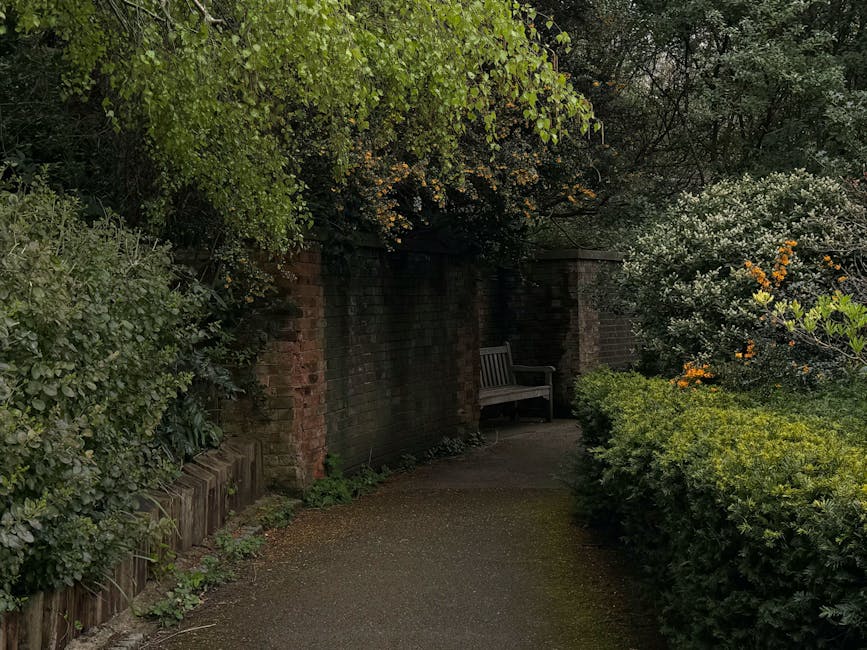
Common problems with driveway access for Camberwell garden teams

If you have ever watched a garden team arrive with mowers, hedge cutters, wheelbarrows, green waste bags, and a trailer to boot, you will know that driveway access can make or break the day. In Camberwell, where homes range from compact terraces to wider properties with shared forecourts and awkward side returns, the small stuff quickly becomes the big stuff. A gate that sticks, a slope that is a bit too steep, or a parked car in the wrong place can slow everything down. This guide breaks down the common problems with driveway access for Camberwell garden teams, why they matter, and how to handle them without stress.
Whether you are booking routine care, a one-off clearance, or a larger landscaping project, the access question is not just logistics. It affects safety, time, cost, and how smoothly the work gets done. Let's face it, nobody wants a crew stood at the kerb trying to work out where to put the van.
Why Common problems with driveway access for Camberwell garden teams Matters
Access sounds like a minor detail until it starts affecting the whole visit. A garden team may only need a few minutes to unload, but if the driveway is narrow, blocked, steep, damaged, or shared, that few minutes can stretch into a real delay. In practical terms, access problems influence what equipment can be brought in, how many people are needed, how long the job takes, and whether waste can be removed cleanly.
For Camberwell properties, this matters even more because many streets are busy, parking is tight, and driveways are not always designed around modern garden equipment. A standard lawn mow is one thing. Moving a mower, chipper, or several heavy bags of cuttings through a narrow side path is another. And if a hedge trimming job is booked during a wet spell, the last thing anyone wants is a muddy, slippery route that turns into a health and safety headache.
There is also the customer side of it. Good access planning helps keep the visit calm, tidy, and predictable. Bad access planning can create friction before work even begins. If the team has to guess on arrival, they may need to change the plan on the spot. That is rarely ideal, and truth be told, it is usually avoidable with a bit of foresight.
For broader service planning, it can be useful to look at the full range of options in the services overview so access requirements are considered alongside the actual task, not after it.
How Common problems with driveway access for Camberwell garden teams Works
In real life, driveway access is a chain of small checks. A gardener or garden team will usually want to know how they get from the street to the work area, where they can park, whether they can unload safely, and what might get in the way. Simple enough, but it is often the difference between a smooth job and a messy one.
Here is how it usually plays out. First, the team checks whether the driveway can take a van or whether parking must stay on the road. Then they look at the route from vehicle to garden: gate width, steps, surface condition, corners, lighting, surface grip, and whether there are obstructions such as bins, bikes, or a low branch. If waste is being taken away, they also need to know whether there is enough room to load it back out without dragging bags through the house or across delicate paving.
In Camberwell, the most common access problems tend to be practical rather than dramatic. Narrow entrances. Shared driveways. Steep drops. Cars left across the entrance. Locked side gates. Overgrown hedging. Wet or uneven surfaces. It is rarely just one issue. Usually, it is two or three little obstacles stacked together. That is where experience counts.
For jobs that create large volumes of cuttings or debris, access matters even more. A one-off tidy-up can become a much easier day if the route is open and the waste can be moved efficiently. If not, teams may need extra passes, extra bags, or an adjusted work sequence. If the job involves heavy clearance, it may be worth reviewing the practical scope of garden clearance before the visit, because access and waste removal go hand in hand.
Key Benefits and Practical Advantages
Getting driveway access sorted does more than save a few minutes. It changes the quality of the whole job. Here are the main benefits people often notice once access is properly planned.
- Less time lost on arrival: The team can get straight to work instead of moving vehicles or hunting for an alternative route.
- Reduced risk of damage: Clear access lowers the chance of scuffed gates, crushed plants, cracked edging, or tyre marks on paving.
- Safer handling of tools and waste: Straightforward routes reduce lifting strain and trip hazards.
- Better pricing accuracy: When access conditions are known in advance, quotes are usually easier to shape realistically.
- Cleaner finish: Waste exits the property more efficiently, which keeps paths and front areas tidier.
- Less neighbour friction: If parking and loading are planned well, there is less chance of blocking someone else's drive or causing annoyance. And that helps everyone.
There is a subtle benefit too: better communication. Once access has been discussed, everything else tends to be easier. The team can plan equipment, sequence work, and estimate timings with more confidence. That is especially helpful for services such as garden maintenance, where repeat visits are smoother when access is already understood.
Who This Is For and When It Makes Sense
This topic matters to homeowners, landlords, property managers, and anyone arranging external work in a garden that is not straightforward to reach. It also matters if you are planning any service that involves larger tools or bulky waste. A small lawn cut is one thing; an overgrown plot with a long walk from van to rear garden is another entirely.
You will probably need to think seriously about access if:
- the driveway is narrow or shared
- there is no off-street parking nearby
- the garden is only reachable through the house, side alley, or a tight gate
- the surface is steep, loose, wet, or uneven
- there are low walls, steps, or fragile paving near the route
- you are arranging a job that creates heavy waste or needs machinery
It also makes sense for customers who want the work completed within a tight time window. If access is poor, the best team in the world still has to slow down. That is just reality. For more hands-on work such as shaping boundaries or managing growth close to entrances, a service like hedge trimming can be affected by access more than people expect, because cut material needs to be carried out efficiently.
If your project involves structural changes or a redesign, access should be discussed alongside the bigger picture. A layout that looks fine on paper can become awkward in practice if it blocks the easiest route into the garden. The same goes for broader schemes covered under landscaping or landscape gardening.
Step-by-Step Guidance
If you want to reduce driveway access issues before a garden team arrives, a simple process works well. Nothing fancy. Just practical steps in the right order.
- Measure the access points. Check gate width, driveway width, and any tight corners. A tape measure is dull, yes, but very useful.
- Look at the full route. From street to work area, note steps, slopes, loose gravel, low branches, and places where tools might snag.
- Clear the obvious blockages. Move cars, bins, bikes, toys, and garden furniture if possible. Even one misplaced item can slow unloading.
- Think about waste flow. Where will clippings, branches, or soil be stacked, bagged, and removed? If there is no easy exit path, the work plan should change.
- Share photos before the visit. A few clear pictures can reveal more than a ten-minute phone call. Front gate, driveway, side access, rear access, and any awkward spots.
- Flag hazards early. If paving is loose, the gate sticks, or the slope is slippery after rain, say so in advance.
- Confirm parking and unloading. Let the team know whether they can use the drive or need to park on the road.
Small note, but a useful one: if a driveway is shared, make sure everyone involved knows the plan. Shared access can be perfectly manageable, but only if neighbours are not surprised by a van sitting there at 8am with the engine idling. Nobody loves that. Nobody.
For recurring jobs, keep the access notes with the service plan. It saves time on the next visit and helps with consistency, especially for routine lawn mowing or general upkeep.
Expert Tips for Better Results
From a practical standpoint, the best access solutions are often the boring ones. Boring is good here. Clear, predictable, and safe beats clever every time.
1. Treat access like part of the job scope
Do not leave access as an afterthought. If the route is awkward, the whole service may need a different setup. A team working on a dense boundary hedge or a heavy overgrowth area may need more time simply because the cut material has further to travel.
2. Use the easiest route, not the shortest one
The shortest route is not always the best route. A longer but flatter and wider path can be safer than squeezing through a narrow side passage with sharp turns. That sounds obvious, but people overlook it constantly.
3. Protect surfaces before equipment arrives
If you know the route is vulnerable, talk about coverings or route protection in advance. Wet tyres on soft paving, dragged bags over decorative stone, or metal wheelbarrows over uneven slabs can all leave marks.
4. Plan around weather
A route that is fine in dry weather can be a problem after heavy rain. Mud, moss, and standing water change grip and visibility. On a drizzly London morning, the difference can be noticeable within minutes.
5. Keep front and rear access separate if possible
Sometimes the front drive is for parking and the rear gate is for movement, or vice versa. Separating vehicle access from pedestrian routes can keep the work calmer and reduce cross-traffic.
For teams that handle larger branches, trunks, or dense waste, it is sensible to match access planning with tree work logistics too. The practical demands of tree lopping and removal are often underestimated until the cut material starts coming down. That is when the driveway suddenly feels half its size.
Common Mistakes to Avoid
Most driveway access problems are not disasters. They are little planning errors that stack up. The good news is that they are usually easy to avoid.
- Assuming a van will fit without checking. Not every driveway is suitable for parking or turning, especially in older Camberwell properties.
- Forgetting about gate clearance. A gate can be wide enough on paper but still awkward because of hinges, latch positions, or limited swing space.
- Ignoring overhead restrictions. Low branches, cables, and canopies can complicate movement more than the width itself.
- Leaving bins or cars in place. The team may have to wait, and the job starts off on the back foot.
- Not warning about fragile surfaces. Old brick paths, decorative gravel, and soft edging need care.
- Booking a large clearance without mentioning access limits. This is a classic one. The job gets more expensive or slower because the reality only appears on arrival.
Another common slip: people focus on the garden, not the route to the garden. Yet it is often the route that decides how efficient the visit will be. A team can work around an awkward lawn. They cannot magic a mower through a 60cm gap. Well, not without some creative language and a lot of patience.
Tools, Resources and Recommendations
You do not need specialist equipment to make driveway access easier, but a few simple tools and habits help a lot.
- Measuring tape: Useful for gate width, slope length, and tight clearances.
- Phone camera: Photos of the driveway, gate, and route help with planning.
- String line or chalk: Handy for visualising a route or marking where vehicles should not go.
- Basic ground protection: Boards, mats, or temporary coverings may be used where surfaces are delicate, depending on the job.
- Bin and furniture relocation plan: Simple, but it removes a surprising amount of friction.
For customers comparing services, it can help to review not just the task but how the company handles reliability, access, and site care. The pages on insurance and safety and health and safety policy are worth reading if you want reassurance about the way work is managed. Likewise, if you are checking how a team handles pricing and job scoping, pricing and quotes can give a clearer idea of how access issues might be factored into the estimate.
And if you want a broader sense of the company behind the service, the about us page can help you judge whether the approach feels right for your property. Sometimes that gut feeling matters more than people admit.
Law, Compliance, Standards, or Best Practice
Driveway access for garden teams is not usually about formal legal thresholds, but there are still important duties and standards to think about. In the UK, safe access, sensible parking, and careful handling of tools and waste are all part of good practice. If work is being carried out near public pavements, shared drives, or busy roads, crews should also think carefully about visibility, obstruction, and moving equipment safely.
Good practice usually means:
- avoiding unnecessary obstruction to neighbours or the public
- keeping routes clear where possible
- reducing slip, trip, and lift hazards
- using equipment appropriate to the access available
- planning ahead for waste movement and vehicle loading
If a driveway is part of a shared arrangement, courtesy matters as much as logistics. It is wise to give clear notice, avoid blocking access longer than necessary, and keep noise and mess under control. Common sense, yes, but still worth saying.
For customers who care about ethical operations and responsible working practices, it can also be useful to review the company's recycling and sustainability approach, especially where green waste removal is involved. If you are comparing service terms, the terms and conditions page can also clarify expectations around visits, access, and service limitations. That sort of clarity saves headaches later.
Finally, if you ever need to understand how the business handles complaints, privacy, or accessibility-related issues, those policies should be available and easy to understand. That is just part of a trustworthy service.
Options, Methods, or Comparison Table
Different access problems need different responses. Some can be solved with better planning; others need a change in method. The table below gives a practical comparison.
| Access situation | Typical problem | Best approach | What to watch for |
|---|---|---|---|
| Narrow driveway | Vehicle cannot park or turn easily | Road parking, hand-carry tools, smaller kit | Longer unload time, pedestrian safety |
| Shared driveway | Conflict with neighbours or blocked access | Pre-notice, timing agreement, compact setup | Keep clear routes for everyone |
| Steep slope | Difficulty moving heavy items | More careful lifting, staged loading, extra time | Slip risk in wet weather |
| Long walk to rear garden | Lots of carrying between front and back | Plan waste stacking points and route protection | Fatigue and repeated trips |
| Blocked frontage | Bins, cars, or furniture in the way | Clear the frontage before arrival | Delay and reduced efficiency |
If the job is simple, a straightforward access plan is enough. If it is larger, think in terms of methods rather than just a route. That is especially true for garden design work or larger installations where the access route can affect both delivery and finish. For customers considering structural improvements, the scope of decking services and other hardscape elements may also influence how materials can be brought in.
Case Study or Real-World Example
Here is a realistic scenario. A Camberwell homeowner books a garden tidy after several weeks of growth. The front driveway looks usable enough at first glance, but on arrival the team finds a narrow turning space, a car parked half over the entrance, and a side gate that only opens fully if a bin is moved first. Nothing dramatic. Just a chain of little snags.
Because the access details were not shared in advance, the team spends the first part of the visit rearranging space, checking the route, and working out whether the mower can be brought through the side passage. The actual garden work still gets done, but not as quickly as it could have. Waste has to be carried in smaller loads, and the finish takes longer because tools must be moved carefully around the parked vehicle.
Now compare that with the same job after a better briefing. The customer sends a couple of photos, confirms the front car will be moved, and mentions the gate catch is a bit sticky. The team brings the right equipment, plans the sequence more efficiently, and uses the driveway as the main unload point. Less faffing about. Less lifting. Fewer awkward moments with a mower wheel caught on the edge of a step. It is a small change, but the difference is obvious.
That is the real lesson: access is not just about whether the team can get in. It is about how smoothly they can work once they are there.
Practical Checklist
Use this quick checklist before your garden team arrives. It is simple, but it works.
- Have I measured the gate and driveway width?
- Is the route to the garden free from bins, bikes, and parked cars?
- Do I need to warn the team about slopes, steps, or slippery surfaces?
- Are any gates stiff, locked, or awkward to open?
- Will the team need to carry waste a long distance?
- Have I shared photos of the access points?
- Have I told neighbours if a shared drive may be used?
- Is there a clear plan for where cuttings or materials can be stacked?
- Do I know whether the vehicle can park on site or must stay on the road?
- Have I mentioned anything fragile, such as paving, planters, or edging?
Quick expert summary: if access is difficult, be honest about it early. Most problems become manageable once they are described clearly. The biggest issues usually come from surprises, not the access itself.
Get a free quote today and see how much you can save.
Conclusion
Common problems with driveway access for Camberwell garden teams are usually practical, not dramatic. Tight entrances, blocked drives, shared parking, awkward gates, steep slopes, and long carry distances can all slow a job down, but they are rarely impossible to work around. With a bit of planning, the right information, and honest communication, most access issues become manageable before they ever cause a real headache.
That is the real takeaway. A garden visit goes better when the route in is thought through as carefully as the work itself. And in a place like Camberwell, where every property seems to have its own little quirks, that matters a lot. If you get the access right, everything else tends to feel lighter. Simpler. Less rushed. Which, to be fair, is exactly what you want from a good garden team.
Frequently Asked Questions
What are the most common driveway access problems for garden teams?
The most common issues are narrow driveways, blocked entrances, shared access, steep slopes, tight gates, and long carry distances from the vehicle to the garden. Wet or uneven surfaces are also a frequent nuisance.
Why does driveway access matter so much for garden work?
Because it affects safety, timing, labour, equipment handling, and waste removal. If access is poor, the team may need more time, different kit, or extra care to avoid damage.
Should I move my car before the gardeners arrive?
Yes, if the driveway or frontage may be used for parking, unloading, or loading waste. Even a partially parked car can make access awkward and slow the job down.
How can I check whether my gate is wide enough?
Measure the clear opening, not just the gate panel itself. Also check for hinges, latches, and anything that reduces usable space. A tape measure and a quick photo are often enough to spot problems early.
What if the driveway is shared with neighbours?
Shared driveways need clear communication. Let everyone know the timing and keep the route as clear as possible. It is usually manageable, but it works best when nobody is surprised on the day.
Can a garden team work without driveway access?
Yes, often they can. They may park on the road and carry tools and waste by hand. The job may take longer, though, especially if the garden is far from the street or the waste volume is high.
Will bad access make my quote more expensive?
It can. Not always, but poor access may increase time, labour, or the amount of manual carrying needed. That is why access details are worth sharing before the quote is finalised.
What should I tell the team before they visit?
Tell them about gate width, parking options, slopes, steps, blocked routes, shared access, fragile paving, and any locked or awkward areas. A few photos are genuinely helpful here.
How do garden teams handle heavy waste on awkward driveways?
They usually break the task into smaller loads, plan a safer route, and use the easiest access point available. For large jobs, waste removal planning becomes a major part of the visit.
Do weather conditions make driveway access worse?
Yes. Rain can make slopes slippery, muddy edges softer, and surfaces less predictable. A route that feels fine on a dry afternoon may be much trickier after a shower.
What are the best ways to improve access before the team arrives?
Move vehicles, bins, and furniture; unlock gates; clear the route; share photos; and flag any tricky surfaces or slopes. Simple preparation can save a lot of time and hassle.
Where can I find more information about services and expectations?
The services overview, pricing and quotes, and insurance and safety pages are useful starting points if you want a better sense of how work is planned and delivered.
What if I have accessibility concerns around my property?
If access is difficult for mobility reasons, or if you need a route to remain clear and predictable, it is worth discussing that upfront. You can also review the accessibility statement for further context on how access-related needs are approached.
Who should I contact if I need to talk through an awkward access setup?
Use the contact page and explain the access situation clearly. The more specific you are, the easier it is to plan the visit properly from the start.
What is the simplest way to avoid driveway access problems altogether?
Be upfront. Measure the space, send photos, mention anything awkward, and keep the route clear on the day. It sounds basic, but it is usually enough to prevent the most common problems.